Why Futsal Will Accelerate Your Player's Development
The England DNA wants coaches to work towards helping players develop outstanding technical ability. This starts in the Foundation Phase and playing Futsal is a great game to use.
The Foundation Phase is the perfect time to introduce players to the benefits of playing Futsal. The constraints of the game really do help to challenge the players, regardless of age, and it is the perfect game to supplement the involvement many young players will have with football. The England DNA demands that a different kind of player is developed and Futsal has a very important role to play.
DNA Foundation Phase Futsal Intro
vimeo.com
In the information that follows I have made reference to a feature of the game and aligned this with the DNA headlines that you will become so familiar with as you use this resource:
If you are indoors in the winter and have limited time – just play the game.
The players will have increased touches and decisions to make (master the ball)
The players will have increased opportunities to: accelerate, decelerate, change direction, stop and start, dodge and feint (master your body)
Players are under constant pressure and have limited space (seek creative solutions)
The players will have more tactical challenges to overcome (instinctive decision making)
There will be more opportunities to shoot, pass, move, dribble and play 1v1 (be exciting with the ball)
The players will have to react to transition more often (instinctive decisions)
The players will have to defend as an individual and a team (intelligent defending)
And whilst all this is going on the players are having fun and enjoying the game.
As coaches we have to consider the balance between structured and unstructured practice time during the week. For our Foundation Phase players the training time in the grassroots game is likely to be between an hour or two hours per week (if you are lucky). If this is all structured, coach led and quite formal in nature then the players will miss out on the problem solving, decision making and improvisation needed just to cope with the game of Futsal.
If you take your team indoors for the winter you have to consider using Futsal. It is a great option for development and the FA now has a range of qualifications from Level 1, Level 2 to UEFA B Futsal which will help coaches develop both themselves and their players using this game.
You will find lots of Futsal practice ideas in line with the England DNA within this section so make sure you consider Futsal as an option for your players and you will be amazed by the results.
In the Foundation Phase, we must promote a real connection between the player and the ball.
Young players want to improve and develop their skills so they are ready for this intervention. Mastering the ball includes building the capability to manipulate and manoeuvre the ball in any direction, at varying speeds and by using any part of the foot or body.
This capability can then be utilised when dribbling, travelling with the ball, turning, receiving, shielding or screening the ball during any subsequent practice activity or game. This kind of practice cannot be skimmed over, rushed or (at worse) overlooked. Developing these fundamental skills will form the basis for all of the development that follows and the Foundation Phase provides the perfect starting point as young players are primed and ready to explore and experiment.
Coaches should encourage this exploration: use a wide range of small-number activities and games to ensure that your players have lots of opportunity to spend time on the ball and make decisions.
A wide spectrum of methods can help to begin the process of ball mastery: from isolated ball-familiarity exercises that promote touch, feel and manipulation aspects (but require very little decision-making capability), to small-number activities, games and formats that will bring returns in all four corners (Technical, Physical, Psychological and Social).
As a coach, your position on this spectrum should be determined by the needs of the group and within that, where possible, the needs of each individual player.
Futsal must be included as a game format during this phase whenever possible. The game will provide massive returns in all areas of development, and the repetition involved in lots of situations that are similar (but never the same) is exactly what is needed at this stage of development. Please make sure you visit the Futsal section to learn more.
Stay on the Ball
It is difficult to say which part comes first - master the ball or stay on the ball - because, in promoting one, you are almost certainly working on the other. However, once players grow in confidence because of their improving ability on the ball, then we need to encourage them to stay on the ball for longer. This does not mean “hog the ball” or dribble until possession is lost.
This headline is about the player knowing that they are able to keep the ball for longer regardless of the pressure from the opposition or from the lack of space available.
Once you develop a confidence in your own ability, time can be spent on thinking about how you might attack and score for yourself or help others do the same. For our under 5-8 players this must be established in such a way that their technique is still good even though there’s more pressure. This could take years of practice, so ensure you give the players lots of variety and opportunity to begin to develop these important fundamental techniques.
A greater technical capability means that you can look for more attacking, threatening and creative options, rather than the easy or predictable ones. More time on the ball means that the game may change whilst you still have possession; supporting positions could change into more attacking ones, or the player on the ball may suddenly turn or dribble out of pressure and the whole pitch could open up before them.
These situations never occur if the player is told to pass the ball early and to the easiest option.
This is probably the hardest part for the adults to deal with let alone actively encourage and promote. This is because we may feel frustrated as we wait for these skills and abilities to develop. It’s vital that we adopt a patient and consistent approach so that players feel supported when developing this aspect of their game.
It will be well worth the wait. Remember that development is a long-term process and by staying on the ball players will develop their dribbling skills, their turns, twists and their spins away from pressure.
The young players will have to become good at “hiding” the ball away from opponents, and brilliant at not only knowing when to release the ball, but who to release it to. This capability will stay with them for the rest of their playing time as the DNA aims to promote this aspect of development right through the phases.
The part you play is important because you will start the whole process off and, if done with real passion and enthusiasm, will be your legacy and your massive contribution to the development of our young players.
To summarise, stay on the ball when:
you have no positive or threatening passing options, and you’re prepared to stay on the ball and see if one appears
there is space in front of you/to the side/behind you and you can change the situation in the game to a more positive, attacking one by travelling with the ball
you have recognised that the situation is 1v1 and you are going to dribble with the ball
you are under pressure, passing options are compromised and you are willing to relieve the pressure and change the situation by screening, shielding or turning with the ball
all of your options are sideways and backwards and staying on the ball may allow the situation to change and present a forward, positive more attacking option.
There is no particular order to these points - they are all equally important.
Stay on the Ball (Futsal)
vimeo.com
The mastery and staying on the ball headlines are perfect for those players at the youngest end of the Foundation Phase, so please make sure this development is prioritised.
Before you consider the other ‘in possession’ headlines, remember that you will have players who are still at the stage where managing the ball is all they can cope with. This is fine and just means that they need more time and more enjoyable ways to practice these things. Make sure you provide this for them.
• “He changed football. We were the Naranja Mechanica, Clockwork Orange. He changed the mentality. We were not just guys moving forward and backward. We played with a lot of pressure on the other team, with a lot of risk in the back. The defenders went forward, the forwards came back. We played football. He even used the goalkeeper … as a libero, playing outside the area.” Wim Rijsbergen, Member of the Netherlands 1974 World Cup squad • •
By doing away with ‘fixed’ positions and making the team the star, football found a new identity. The inert, gelatinous pace of football gave way to something entirely different – a game of positions, of movements and constant circulation. The game of Total Football.
Faith Mensah from Buckhurst Hill u 12 blacks will be wearing the red and white of Arsenal for the up and coming 2017/2018 season after a successful trail. Faith was selected out of 150 girls including 20 current academy players. Faith had trained with the Buckhurst Hill Lionesses on Friday nights but opted to continue playing with the u 12 blacks. Stuart Blake (coach) has coached Faith since she was 6 years old. Faith's ability to read the game was always 18 months ahead of the rest of the players add that to her pace, strength and tackling ability made her very hard to play against. During her 4 seasons with Buckhurst Hill blacks Faith has won either parents player or the players player award.
Laura Mensah said "Iwould like to thank the club for their continued support whilst playing for Buckhurst Hill FC. This had been a fun, exiting and, at times, challenging experience. The team, Buckhurst Hill Blacks, has always been dedicated and committed which makes it a great environment to play in. I would especially like to thank Stuart Blake for being so dedicated and supportive over the years, thank you for teaching Faith so much and driving her in the right direction."
Faith's attitude, willingness to learn and coupled with her playing ability gives her every chance of a career in football. She has been an absolute pleasure to work with.
Buckhurst Hill Lionesses
announce a 2 nd player to sign an academy contract
It is with great pleasure and sadness that Buckhurst Hill Lionesses announce that Hannah Luxton will be continuing her career wearing the Yellow and Red of Watford Ladies F.C for the 2017/2018 season.
In the newly formed ladies team this season, Hannah joins her brother Michael as an academy player at Watford as a Ladies Under 12 player. Both Luxton children have been involved in the Buckhurst Hill set up for many years with Michael training since the age of 4 years old and Hannah training with the Lionesses since the inception of the girls team. Finishing runners up in their 1st ever tournament last year.
An avid sportswoman for many years Hannah was recently selected to represent Watford after attending two trails of over 80 girls in her age group. Keen to test herself against the best teams in the area she is looking forward to putting into practice the skills and work eithic she has learned at the club.
Roger Luxton said “Both kids have been given an excellent basis and education in playing the game in the right way, with an emphasis on doing the right thing at the right time, every time. They could not of had a better introduction to football at grassroots level. The club encourages the players to develop in excellent facilities ensuring that all coaches and managers maintain a fun and educational atmosphere synonymous with the family tradition of the club. As always we will look to stay involved with the club as a former coach and two former players with many great memories and friends made in our time there”
"Hannah has been a pleasure to have in our girls section , i also think playing Futsal has helped her progress . Having 2 girls signed from our newly formed Lionesses section in 6 weeks the other Being Faith Mensah who was recently signed by Arsenal is a massive achievement and something i Stuart Blake , Craig Sherrin and Alison Marsh are very proud of . Our Lionesses are increasing in numbers by the week , if you want to play football contact our girls section . email girls@bhfc.co.uk
In this article we explore the importance of playing with both feet and why it should be a vital part of a players technical development.
Game Base Level
In the modern game we are consistently urging our players to work on tricks, skills and flicks often without the base level of the game being explored.
Base Level is our fundamental technical qualities as a football player, for example, receiving, controlling passing and shooting. Around these technical aspects, are the principles of the game which inform how, why and when we might perform these actions.
One technical quality that often gets neglected and forgotten about is playing with both feet.
Weak foot and strong foot
From a soccer coaching point of view, we do often hear the term “weak foot and strong foot”. This terminology should be adapted when discussing this topic. Otherwise, we risk indicating to players that they are weak in an area of their technical capability. When addressing players during a technical coaching drill, use left, right or 'other foot' to avoid negative association.
Why
The ability to use both feet whenever is needed can separate the great players from the good ones but why is it so important to use both feet? Here are some reasons:
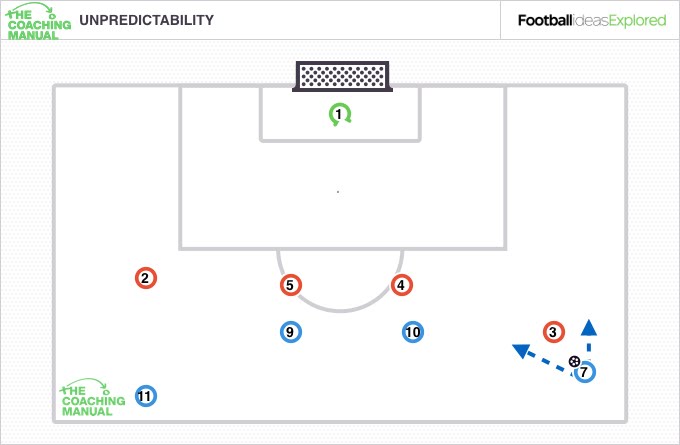
Unpredictability
Having the capability to use both feet creates unpredictability in your play. If you are consistently using one foot, it is easier for a defender to identify where a player will be going and how your body will shape when passing, dribbling or running with the ball.
Using both feet means that you are comfortable either side, especially when dribbling with the ball.
When defending, players, often like to get side on, which means they will try to show you the way they want you to go as an attacker. If you are right footed, they will show you to your left, understanding it may be difficult to dribble to the left side. However, if you are able to use both feet then it become virtually impossible for them to predict which way you will go, making it difficult to defend against.
Unpredictability is one of the greatest assets you can have as a player, and playing with both feet helps.
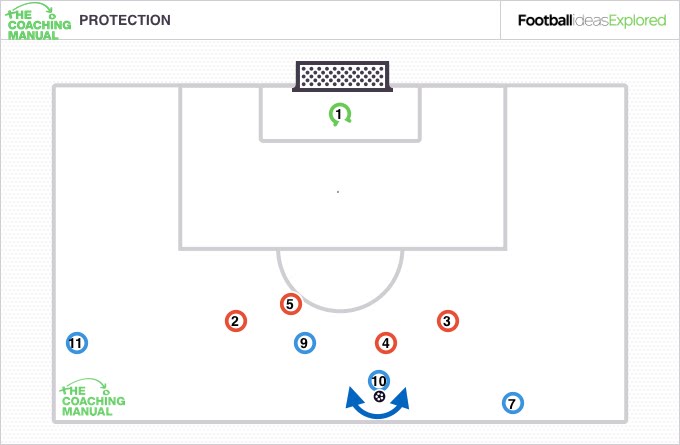
Protection
A Base Level skill that players should be learning is how to protect the ball, shielding away from defenders. When playing with two feet this becomes an easier task.
As a player moves to protect the ball, they can use both feet to shield the ball on the inside as well as the outside of the foot. As with a player who uses one foot constantly, they look to always move to one side or use one foot to control to move left or right. This can expose the ball if the player always turns with the ball with the outside of the foot.
Protecting the ball with both feet can give an air of unpredictability as the defender will have no idea which side you will go.
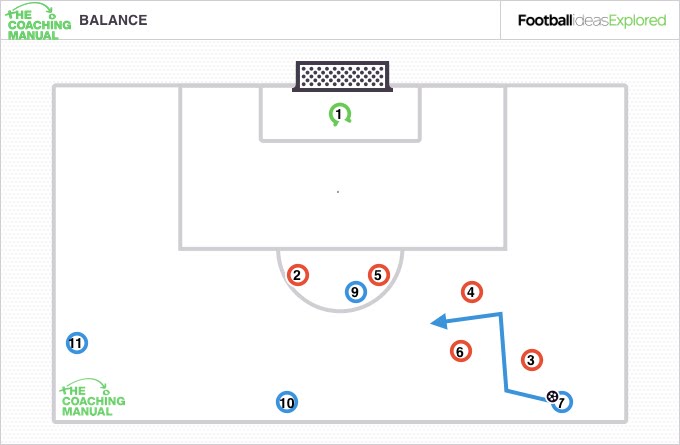
Balance
When playing with only one foot, players can often have balance issues. This means that if the ball is on one side of the their body, for example the right, and they are left footed, the player will need to stretch their leg to the opposite side of their body to remain in control of the ball.
By being able to use either foot, a player doesn't have to constantly shift their weight across the ball, often causing unbalance when the ball is not under-control or in difficult positions.
Using both feet allows a player to shift their weight across and over the ball with balance and control.
Disguise
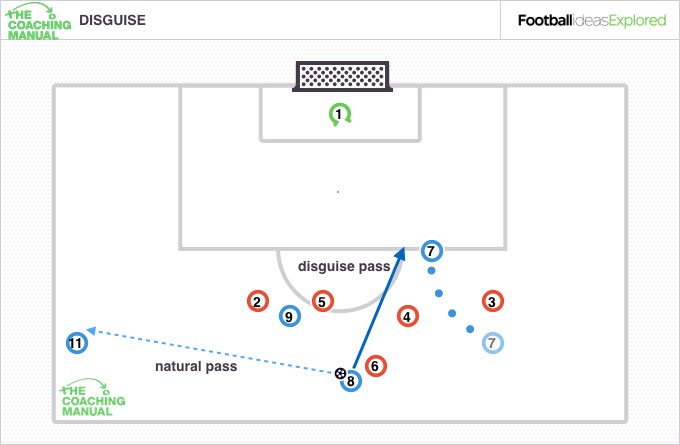
Like unpredictability, disguise gives the defender uncertainty in your play. By using both feet to disguise where the pass may go, attackers can play with both feet allowing you to go either way past a defender. This can make it difficult for the opposition to defend against.
For example, when passing, if the player is right footed and running to the left, then the player may find it difficult to pass back to the right side, and would only be able to go forward or to the left side. However, if the player can use their left, he can disguise pass back to the right side cutting the pass across and behind the defenders.
Speed
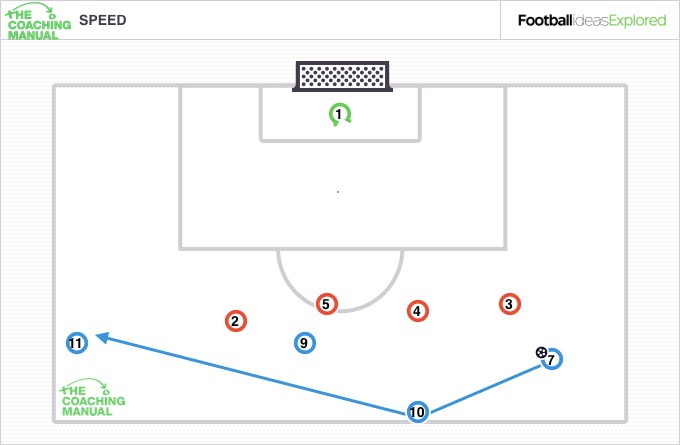
Speed of thought and speed of play are increasingly vital parts of the game. Using both feet can help both speed of thought and play. This is because actions can be executed when the ball is on either side of the body.
When receiving the ball, we can see how players with two feet look to move the ball by receiving on the back foot to then pass on the ‘front’ foot.
Using both feet to receive and pass creates a quick passing action, to move the ball in one swift movement, rather than if a player receiving on the right foot, for example, and then adjust the body to then pass.
This is beneficial to switch the play or to move the ball forward quicker than with playing on the same foot.
When talking about speed of a player when running with the ball for example, we look at a players stride and how they can push the ball in front of them to run. When playing with both feet the stride can be interchangeable allowing both feet to move the ball forward when running with the ball.
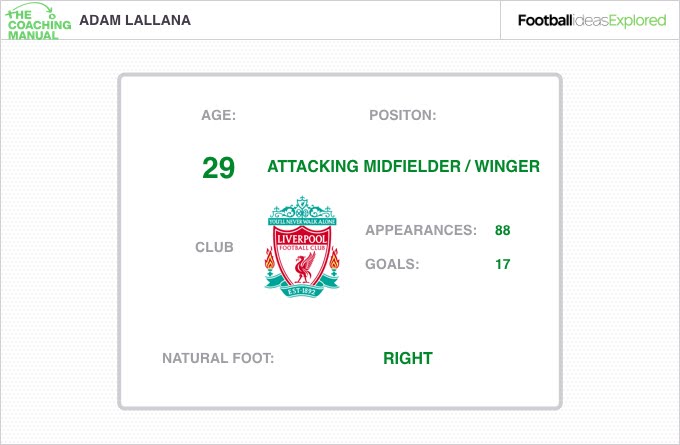
Here are a few players that we feel are some of the best in the business at using both feet.
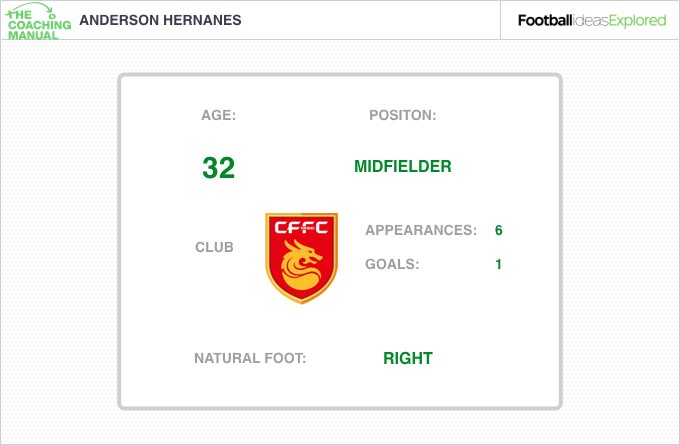
Anderson Hernanes
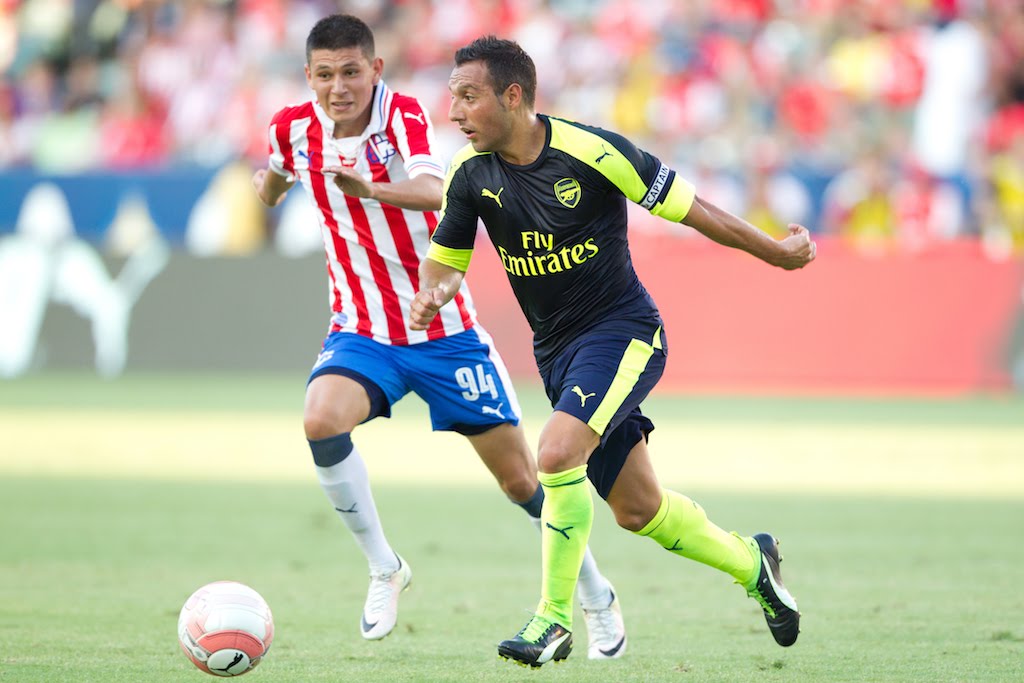
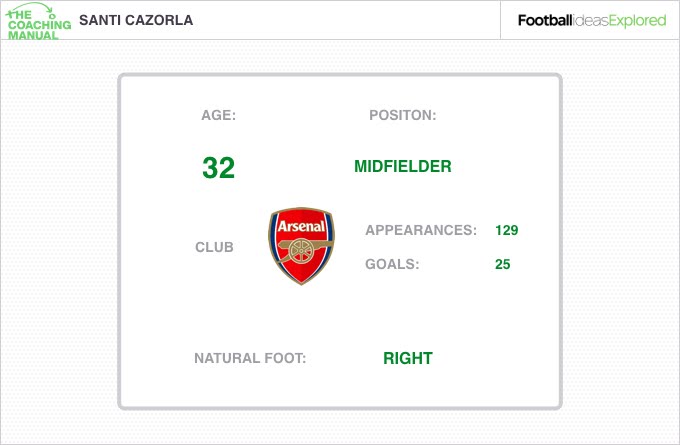
Santiago Cazorla
Adam Lallana
Take Home's
Being able to master playing with both feet is one of the most important parts of players technical development and can often transform good players into great players.
From a technical and tactical standpoint, being comfortable with both feet allows a player to play anywhere on the pitch giving options to the team.
Players who play with both feet have the capacity to change games with their unpredictability and inventiveness to create football actions quicker than a player who only plays with a left or right.
In the related content we will see how you can improve a players ability to play with both feet with simple exercises in training.